

How to use a squat rack for front lunges?
Sep 29, 2025
Leave a message
Hey there, fitness enthusiasts! If you're looking to take your front lunges to the next level, you've come to the right place. As a squat rack supplier, I'm here to share some tips on how to use a squat rack for front lunges effectively.
First off, let's talk about why using a squat rack for front lunges is a great idea. A squat rack provides stability and support, which is especially helpful if you're new to lunges or if you're using heavy weights. It also allows you to control your movement and maintain proper form, reducing the risk of injury.
So, how do you use a squat rack for front lunges? Here's a step-by-step guide:
Step 1: Set up the squat rack
Adjust the height of the safety bars on the squat rack so that they are just below your hip level. This will provide a safe stopping point in case you lose your balance or need to rest during the exercise.
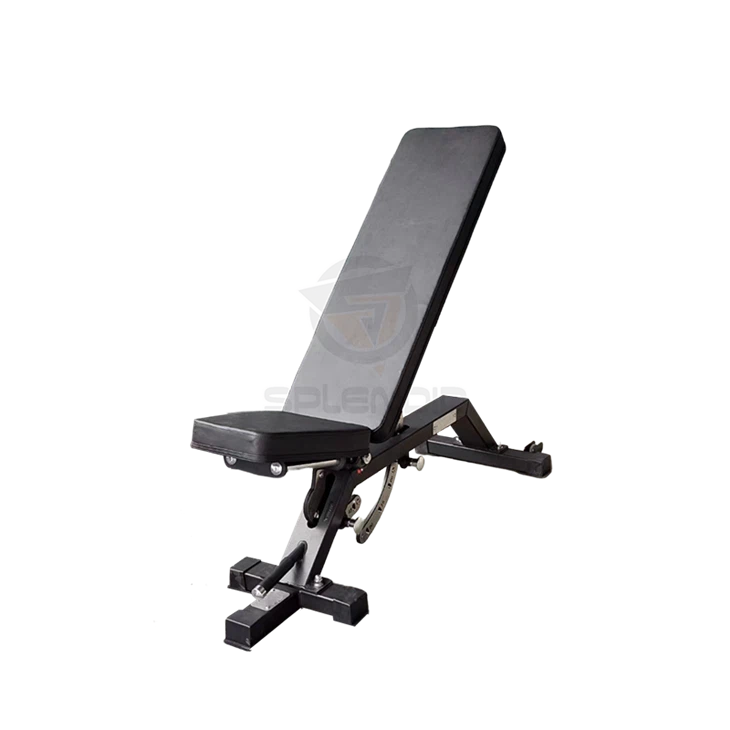

Step 2: Load the barbell
Place a barbell on the squat rack at a comfortable height. You can use a variety of weights depending on your fitness level and goals. If you're new to lunges, start with a light weight and gradually increase the weight as you get stronger.
Step 3: Position yourself under the barbell
Stand under the barbell with your feet shoulder-width apart. Make sure your feet are parallel to each other and your toes are pointing forward.
Step 4: Grasp the barbell
Reach up and grasp the barbell with your hands slightly wider than shoulder-width apart. Your palms should be facing forward or slightly inward.
Step 5: Lift the barbell off the rack
Bend your knees slightly and lift the barbell off the rack. Keep your back straight and your core engaged.
Step 6: Step forward into a lunge
Take a big step forward with your right leg, lowering your body until both knees are bent at a 90-degree angle. Make sure your front knee does not go past your toes and your back knee does not touch the ground.
Step 7: Push through your front heel
Push through your front heel to return to the starting position. Repeat the lunge with your left leg.
Step 8: Complete the desired number of repetitions
Continue alternating legs and performing lunges for the desired number of repetitions. You can do 2-3 sets of 10-15 repetitions per leg.
Tips for using a squat rack for front lunges
- Use proper form: Make sure your back is straight, your core is engaged, and your knees do not go past your toes. This will help prevent injury and ensure that you're getting the most out of the exercise.
- Start with a light weight: If you're new to lunges, start with a light weight and gradually increase the weight as you get stronger. This will help you build strength and confidence without risking injury.
- Focus on your breathing: Inhale as you lower your body into the lunge and exhale as you push through your front heel to return to the starting position. This will help you maintain proper form and control your movement.
- Use a mirror: If possible, use a mirror to check your form and make sure you're performing the exercise correctly. This will help you identify any areas that need improvement and make adjustments as needed.
- Rest between sets: Give your muscles time to recover between sets by taking a 1-2 minute break. This will help you avoid fatigue and perform at your best.
Other exercises you can do with a squat rack
In addition to front lunges, there are many other exercises you can do with a squat rack. Here are a few examples:
- Squats: Squats are a great exercise for building lower body strength and muscle mass. You can perform squats with a barbell, dumbbells, or kettlebells.
- Deadlifts: Deadlifts are a compound exercise that works multiple muscle groups, including your back, glutes, and hamstrings. You can perform deadlifts with a barbell or dumbbells.
- Bench press: The bench press is a classic exercise for building upper body strength and muscle mass. You can perform the bench press with a barbell or dumbbells.
- Pull-ups and chin-ups: Pull-ups and chin-ups are great exercises for building upper body strength and muscle mass. You can perform pull-ups and chin-ups using a pull-up bar attached to the squat rack.
- Rows: Rows are a great exercise for building back strength and muscle mass. You can perform rows with a barbell, dumbbells, or a cable machine.
Conclusion
Using a squat rack for front lunges is a great way to take your fitness to the next level. It provides stability and support, allowing you to perform the exercise with proper form and control. By following the steps outlined in this blog post and using the tips and exercises provided, you can build strength, improve your balance, and reduce your risk of injury.
If you're interested in purchasing a squat rack or other fitness equipment, please don't hesitate to [contact us for a purchase consultation]. We offer a wide range of high-quality squat racks and accessories to meet your needs and budget.
References
- American Council on Exercise (ACE). (n.d.). Front Lunges. Retrieved from https://www.acefitness.org/education-and-resources/lifestyle/exercise-library/62/front-lunges/
- National Strength and Conditioning Association (NSCA). (n.d.). Squat Rack Exercises. Retrieved from https://www.nsca.com/education-resources/exercise-library/squat-rack-exercises/
- StrongLifts. (n.d.). How to Do Front Lunges. Retrieved from https://stronglifts.com/front-lunges/